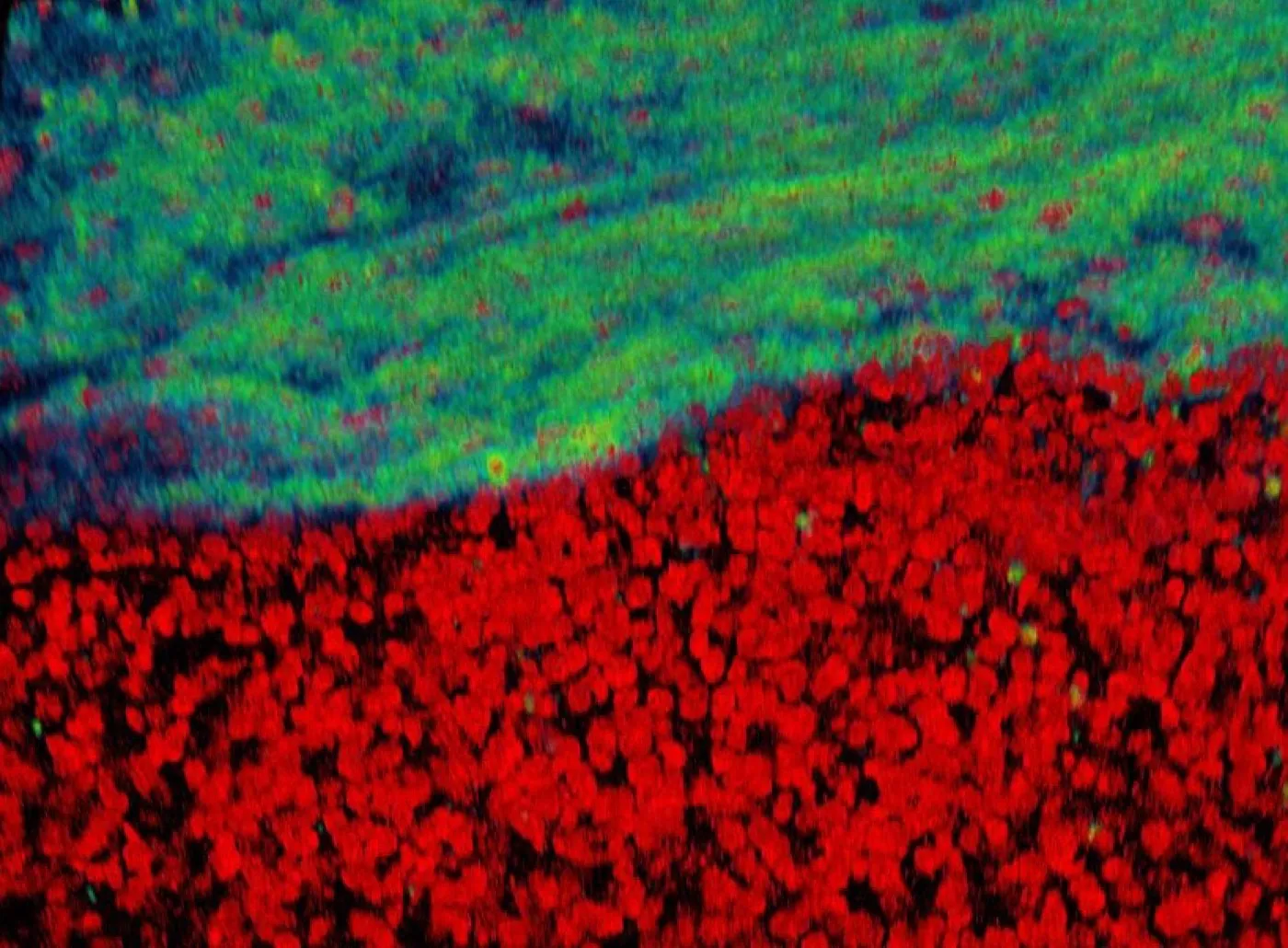
SpatioTemporal Biology
Sampling and sensing living tissue repeatedly to map how molecules change in space and time, and to diagnose disease without a biopsy.
Spatial biology maps the molecular make-up of tissues, but most methods need tissue that is no longer alive, so they capture a single moment. We use porous silicon nanoneedles to collect biomolecules from living tissue without destroying it, so the same tissue can be sampled again and again.
In Nature Nanotechnology (2025) we showed that nanoneedles can repeatedly sample live brain tissue and map lipid distribution by mass spectrometry imaging, preserving the tissue while replicating its spatial molecular profile. Machine learning on human glioma biopsies classified disease states, and in mouse gliomas we followed lipid changes over time and with treatment.
Because nanoneedles sense inside cells and collect molecules from tissue surfaces, they also open routes to diagnosis without taking a biopsy. We mapped enzyme activity inside cells of human oesophageal tissue (Advanced Materials, 2015) and reviewed nanoneedle-based sensing in biological systems (ACS Sensors, 2017). In epidermolysis bullosa, we combine Raman spectroscopy with nanoneedle sampling to detect disease changes in wounds, in work with DEBRA UK and Professor John McGrath.
We are now extending nanoneedle sampling to other molecules and to inflammation, supported by Biohub, with Andy Tay (National University of Singapore) and Bart Deplancke (EPFL).