Cell and Gene Therapy
Delivering genes and gene editors into hard-to-transfect cells and tissues.
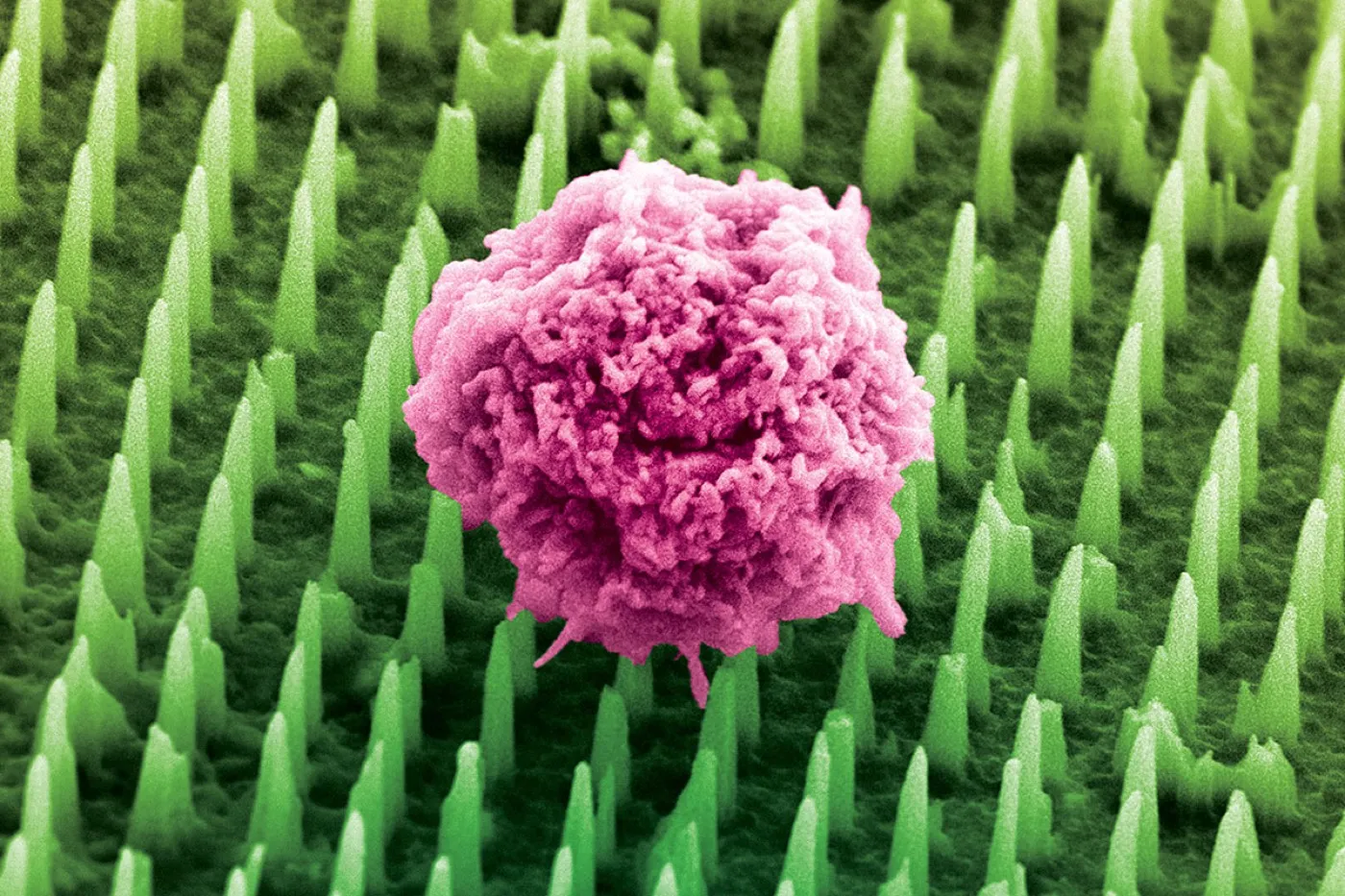
Getting genes and gene editors into the right cells, safely and at scale, is one of the main bottlenecks for advanced therapies. Nanoneedles deliver nucleic acids and proteins into cells with minimal disruption, both in culture and in tissue.
- Gene editing for inherited disease. Nanoneedles delivered an adenine base editor that corrected a pathogenic COL7A1 variant in cells from people with recessive dystrophic epidermolysis bullosa with 96.5% efficiency (Advanced Materials, 2025). With Cure EB, the NanoCure project is preparing a nanoneedle bandage for a first-in-human study. We also work on gene editing for inherited eye disease.
- Cell therapy manufacturing. Nanoneedle electroporation engineers primary human regulatory T cells with chimeric antigen receptors without viral vectors (Advanced Science, 2025), and our perfusion microbioreactor supports small-batch CAR-Treg production (iScience, 2026).
- How it works. We found that caveolar endocytosis is what turns nanoneedle delivery into gene expression (ACS Nano, 2026).